Birding in the Land of the Midnight Sun
Finland & Norway — Spring 2018
I first came across Ruth Miller and Alan Davis when they gave a talk to our local RSPB group about their Biggest Twitch—a year-long journey around the world during which they recorded a record-breaking 4,000 bird species. When my friends, the Grabers, told me about a forthcoming Finland and Norway trip with their company, BirdwatchingTrips, I decided to join them. I particularly liked the idea of a small group of just six guests, but also the prospect of seeing lots of owls.
Ruth and Alan were helpful, friendly and knowledgeable, as well as great fun to travel with. Our journey took us through Finland, where we were joined by a local guide, Tuomas, who was brilliant at finding the birds we wanted to see and never gave up on a search. Leaving Finland and Tuomas behind, we travelled north to Norway’s unspoiled Varanger Peninsula on the edge of the Barents Sea, one of the northernmost regions of mainland Europe.
Trip at a Glance
| Dates | 19 May – 2 June 2018 |
| Countries | Finland & Norway |
| Duration | 15 days |
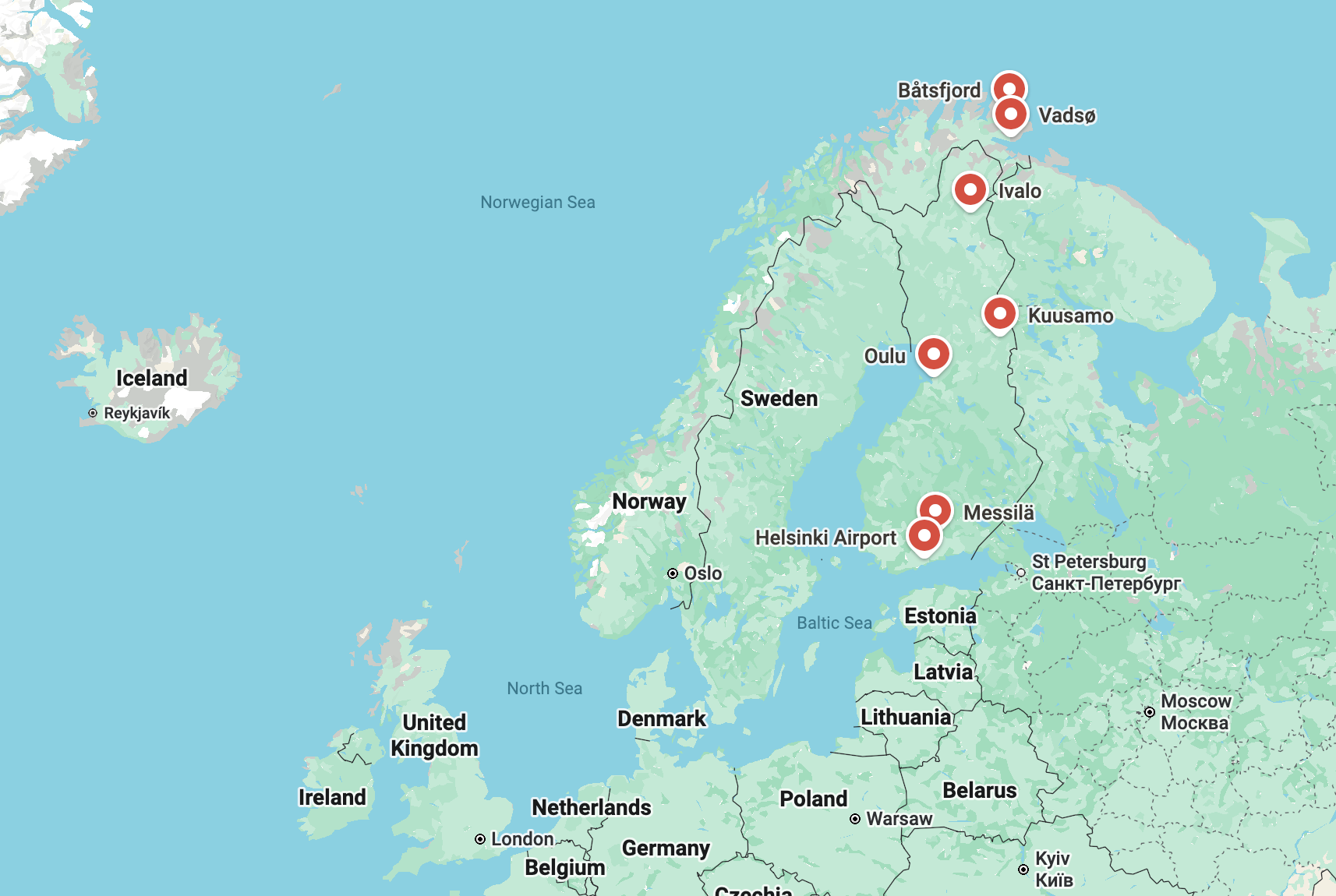
| Route | Helsinki → Messilä → Oulu → Kuusamo → Ivalo → Vadsø → Båtsfjord → Ivalo → Helsinki |
| Organisers | BirdwatchingTrips |
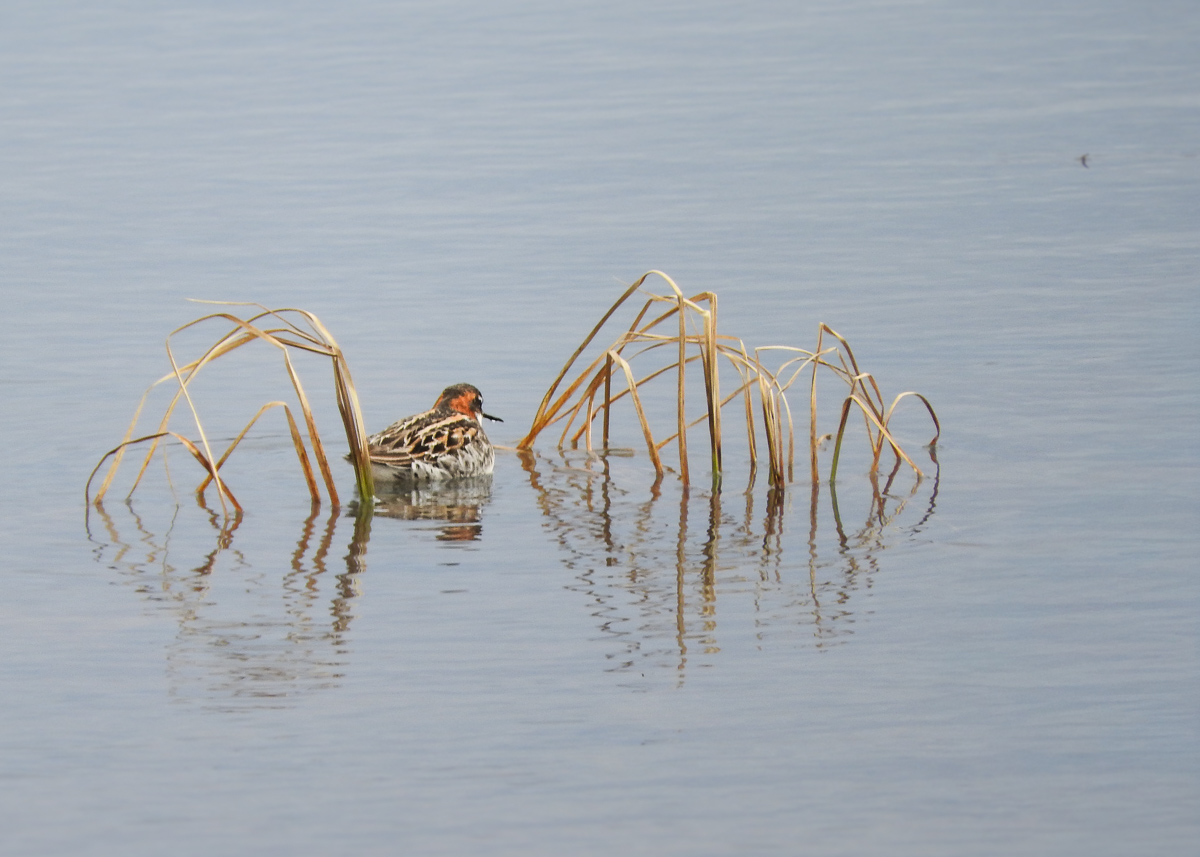
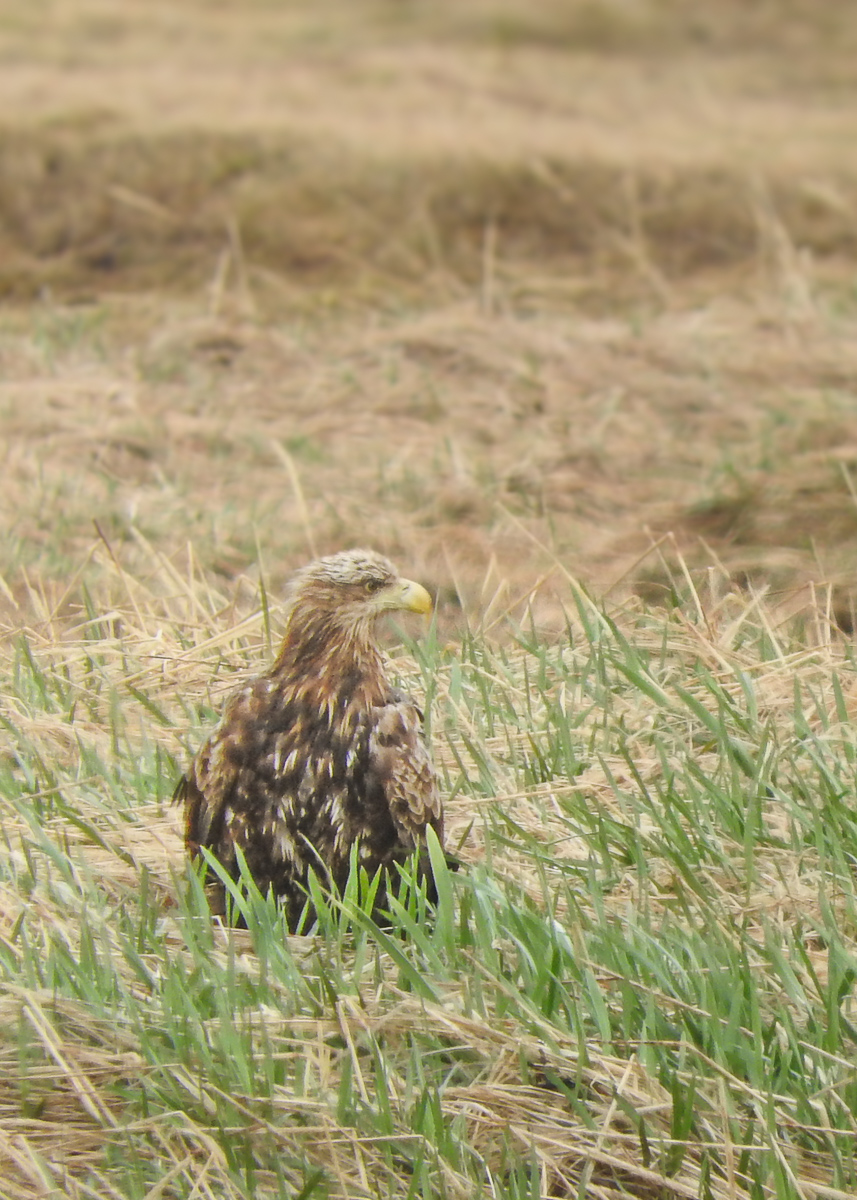
| Birding Highlights | Lots of different owls, from the tiny Pygmy Owl to the imposing Great Grey Owl, and woodpeckers; White-tailed Eagles galore; Gyrfalcon, Siberian Jay, Red-flanked Bluetail and Pine Grosbeak, to mention a few. There were also plenty of Ruff and other familiar birds in full breeding plumage. |
Messilä — Days 1–2
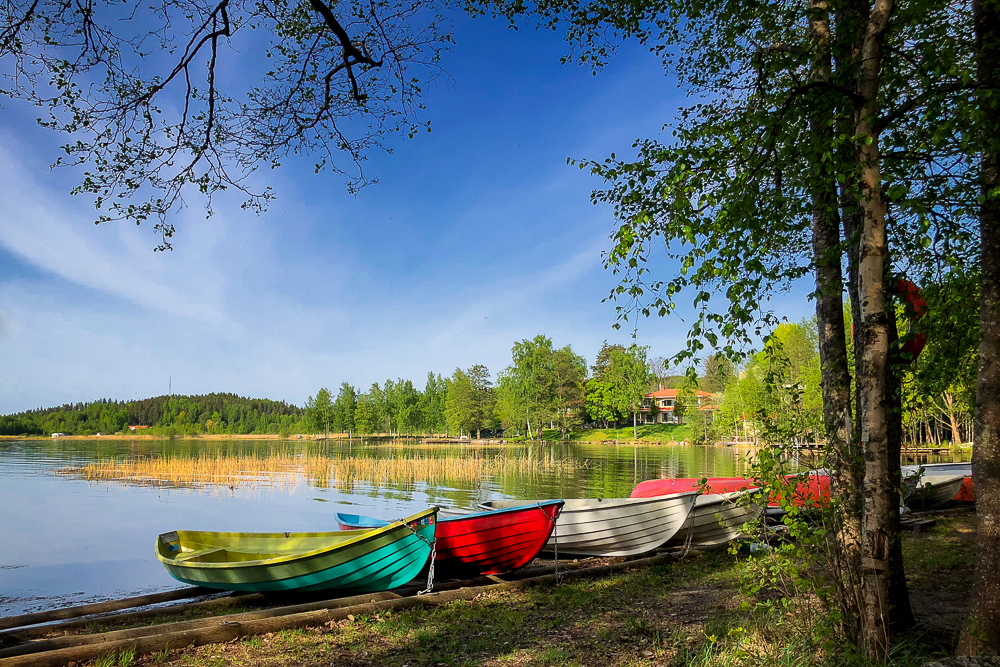
After arriving at Helsinki airport, where we met the rest of the group and our local guide Tuomas Seimola, we drove to the Lahti area where we spent two nights at the Manor Hotel in Messilä.
Our first morning got off to a great start with a Wryneck in the garden. Tuomas had arranged for us to meet a couple of local bird ringers and join them on their regular survey. The first was Perti, a very experienced ringer who has studied Ural Owls in particular for some fifty years. One of his nest boxes contained a female Ural Owl with eggs close to hatching. She remained remarkably calm while Perti checked on her, giving us great views.
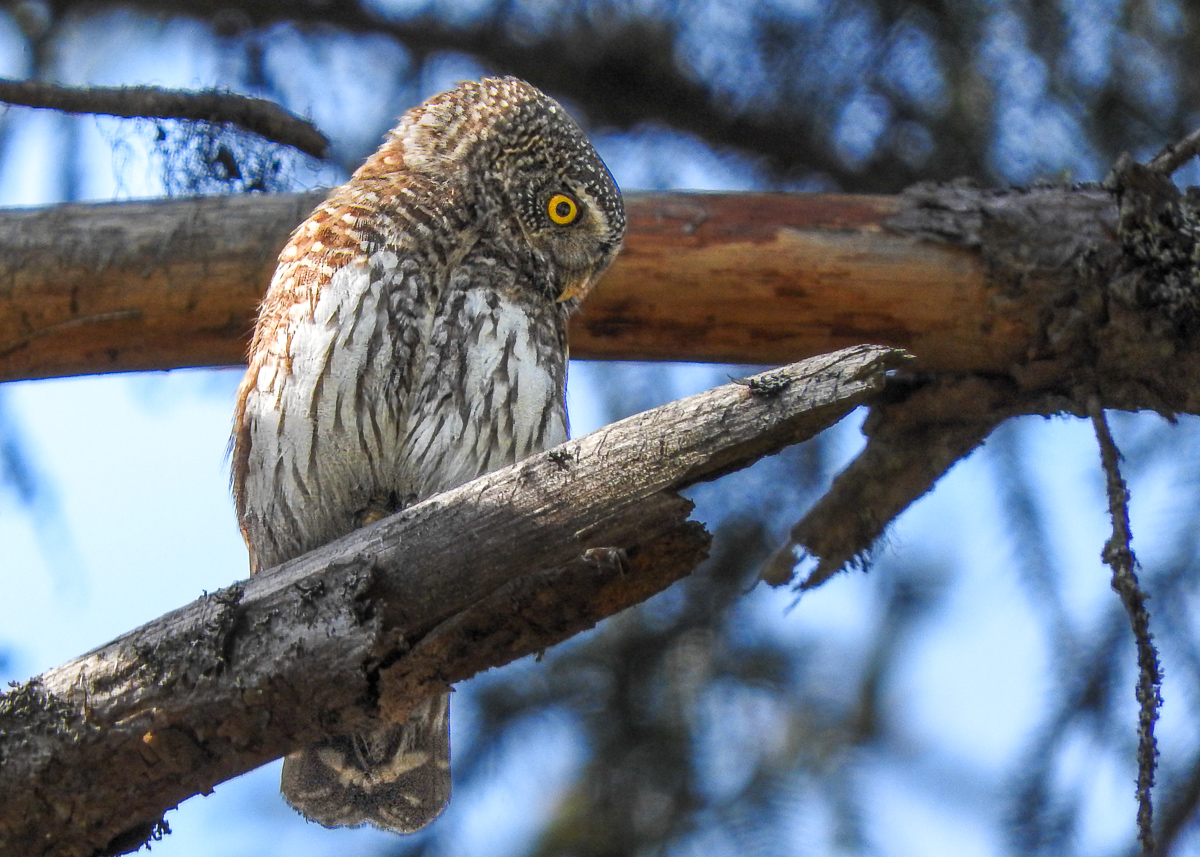
The second ringer had a nest box for a European Pygmy Owl. We were very lucky to find the tiny male nearby and enjoyed super views of this pint-sized owl. We then continued to a lake where a White-backed Woodpecker poked its head out of its nest hole. After lunch, a walk around Tuomisto near Lahti rewarded us with a group of cute fox cubs to finish the day.



Oulu — Day 3
Leaving Messilä behind, we went north to Oulu, stopping at a roadside café decorated with an impressive collection of bells and fitting in some birding along the way.
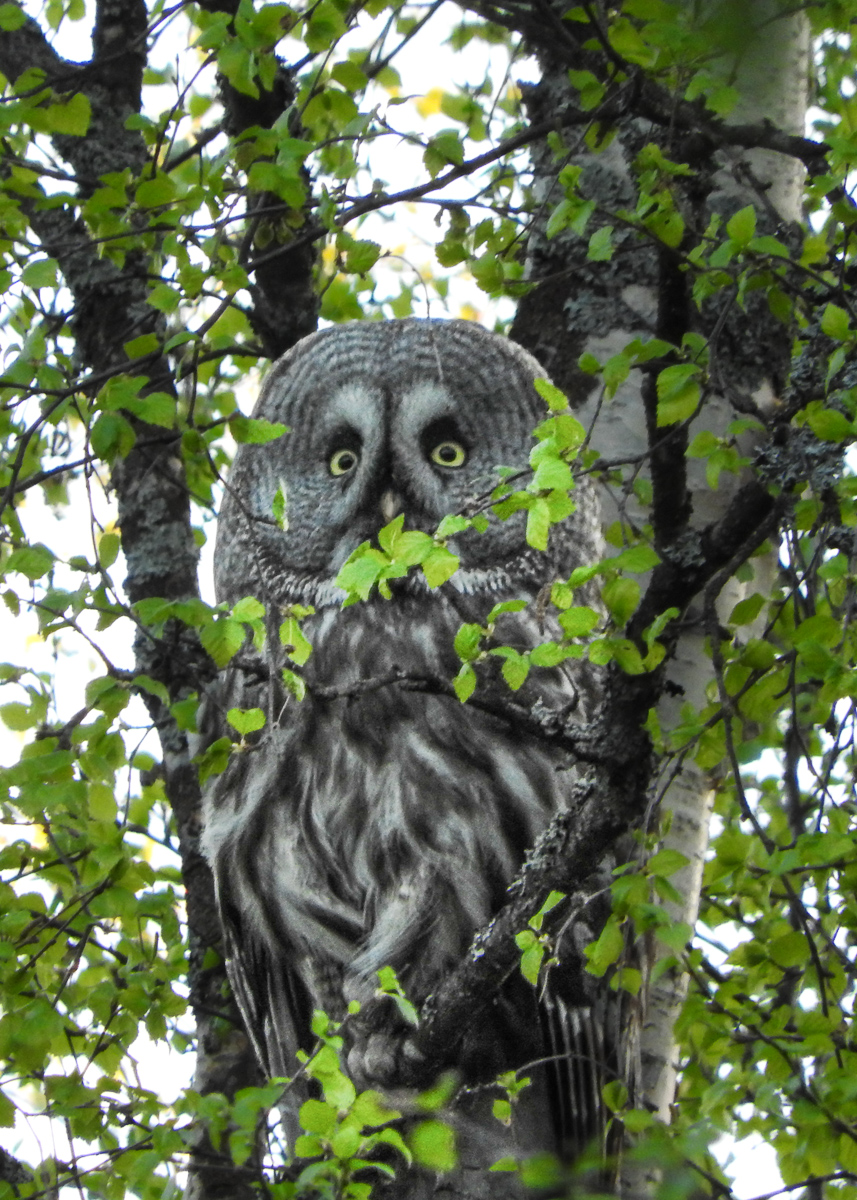
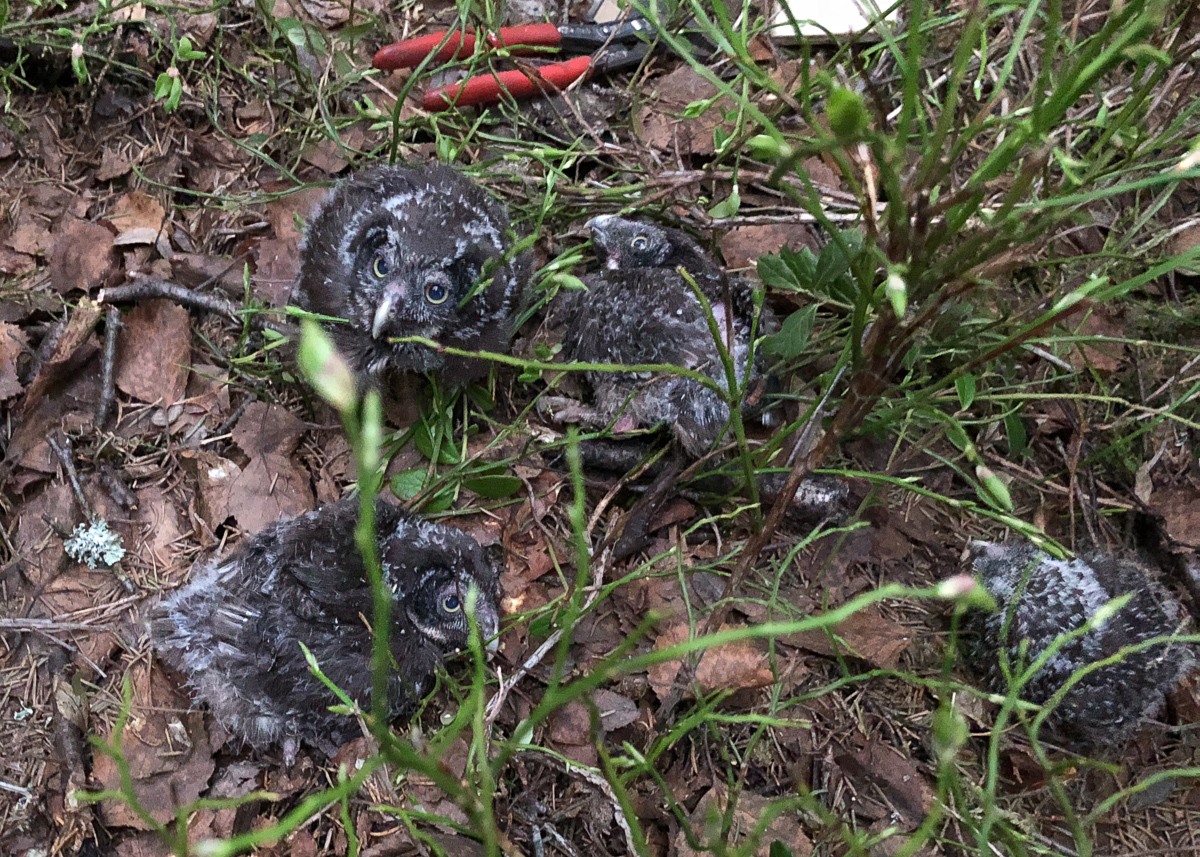
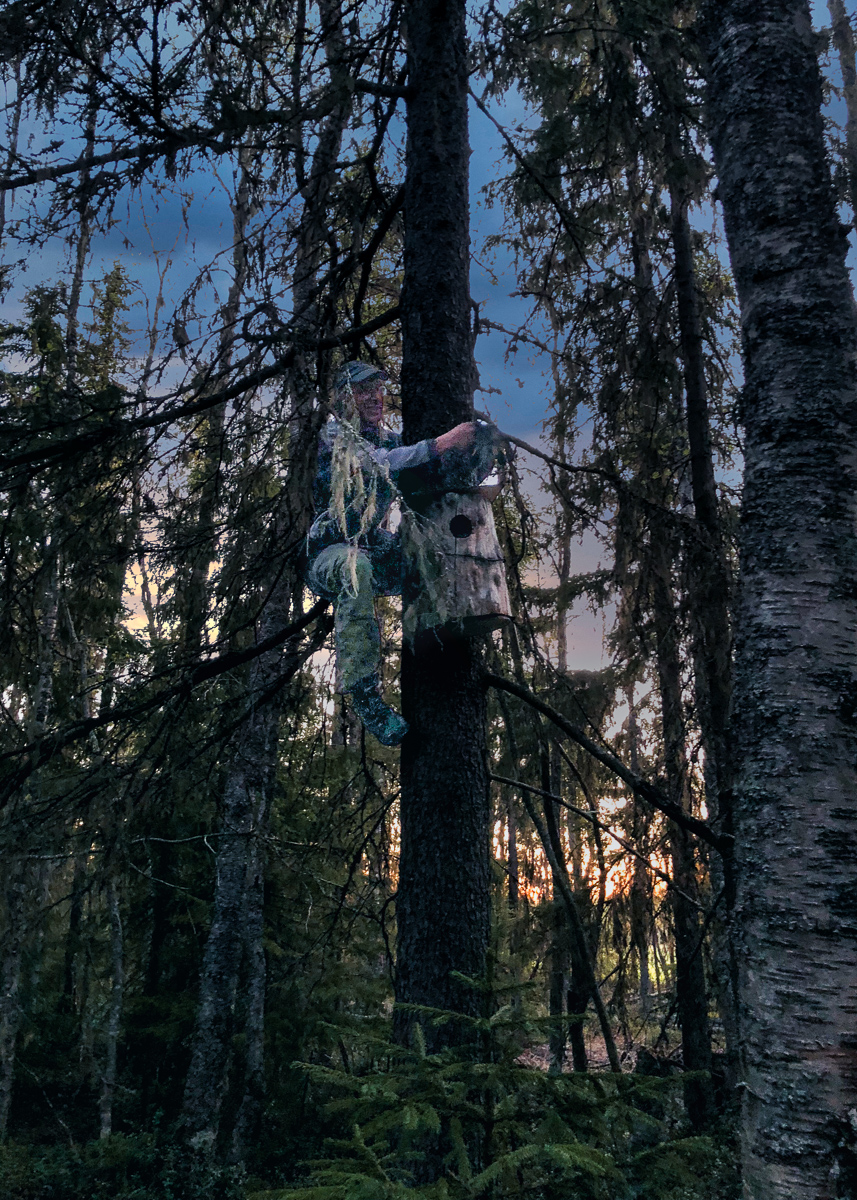
After dinner, we set off for a memorable evening with owls. A local expert first took us to a Great Grey Owl nest he was monitoring. As he examined the nest box, the female stared down at us with piercing yellow eyes from a nearby birch tree. Next on the agenda was a Tengmalm’s Owl nest that our ringer friend was monitoring as part of his ongoing studies. The nest contained five chicks, which were quickly measured, ringed, and safely popped back into their box.
By the end of the night, we had seen five different owl species: Great Grey Owl, Tengmalm’s Owl, Short-eared Owl, European Pygmy Owl and Northern Hawk Owl. Quite an experience!
Kuusamo — Days 4–6
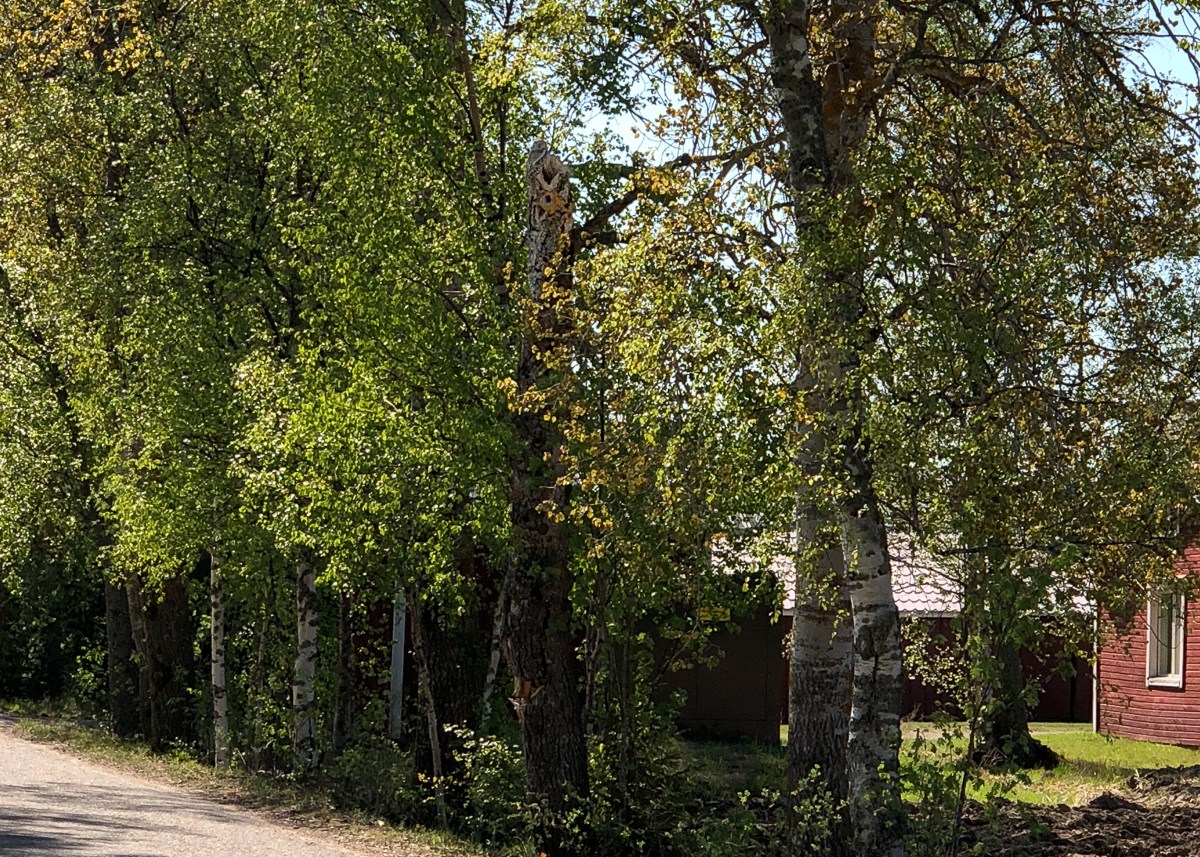
Our journey continued north to Kuusamo, an area of vast forests, lakes, and wild landscapes close to the Russian border. We hadn’t gone far before we spotted another Hawk Owl. These birds are remarkably tolerant of people and this pair had set up home on the edge of a farmhouse garden beside a quiet country road.
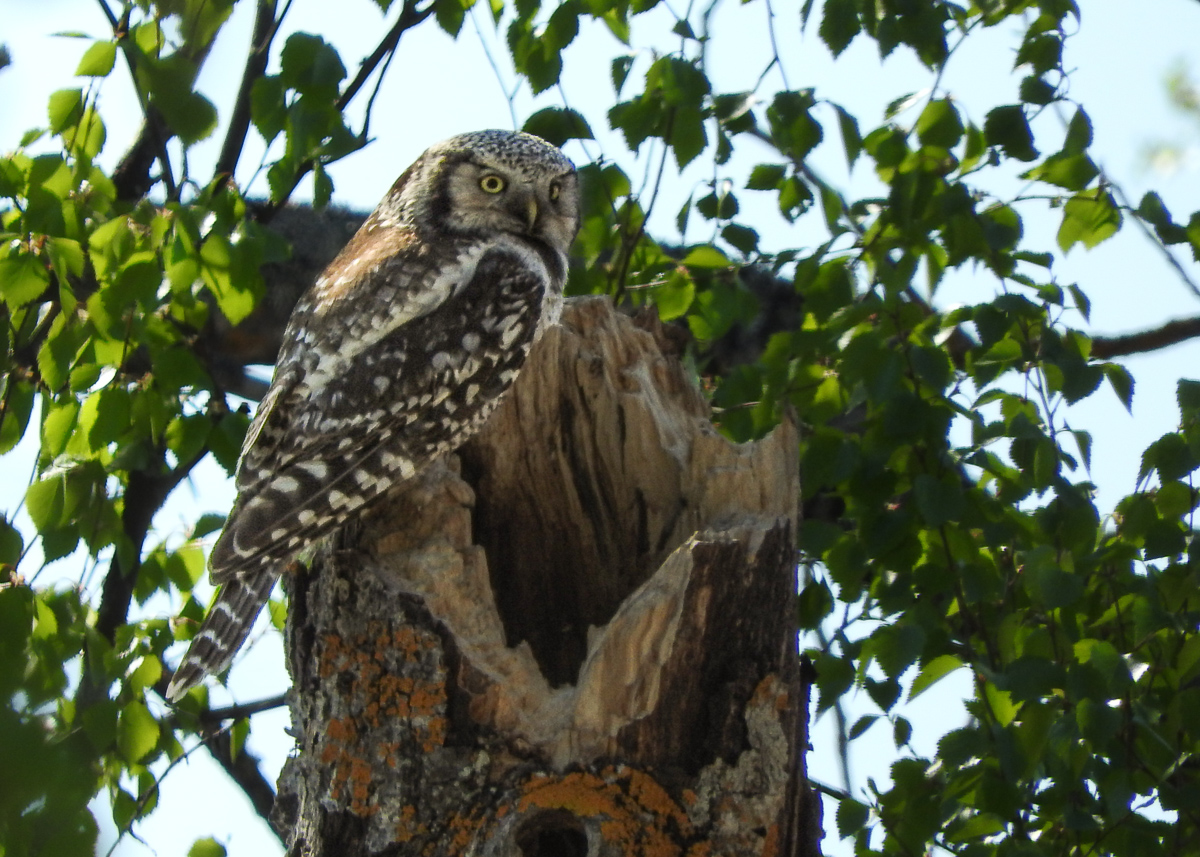
We then stopped at the Liminka Bay nature reserve on the Baltic coast. We later had a coffee break at a golf course whilst watching a Black Woodpecker nesting in a large tree across the green.


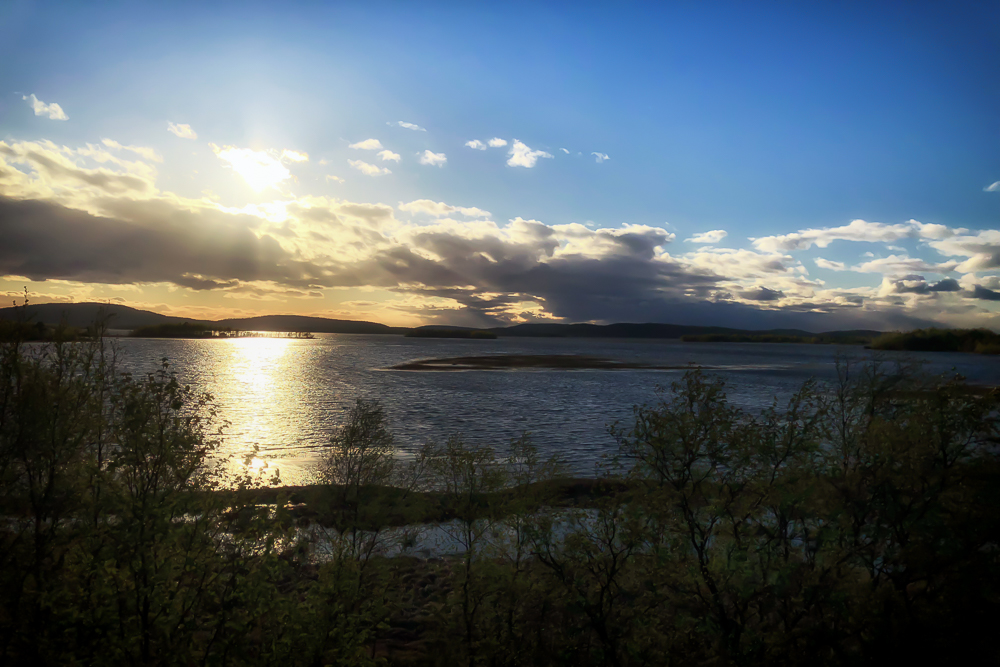
The next two days were spent exploring the Kuusamo area. On the first day we walked through the forests behind the ski slopes, explored the shores of a beautiful lake, and experienced the quiet of the northern woodland. One of the highlights was finding Siberian Jays. The day ended with a peaceful late-evening walk to watch the sunset at Pajuniemi.
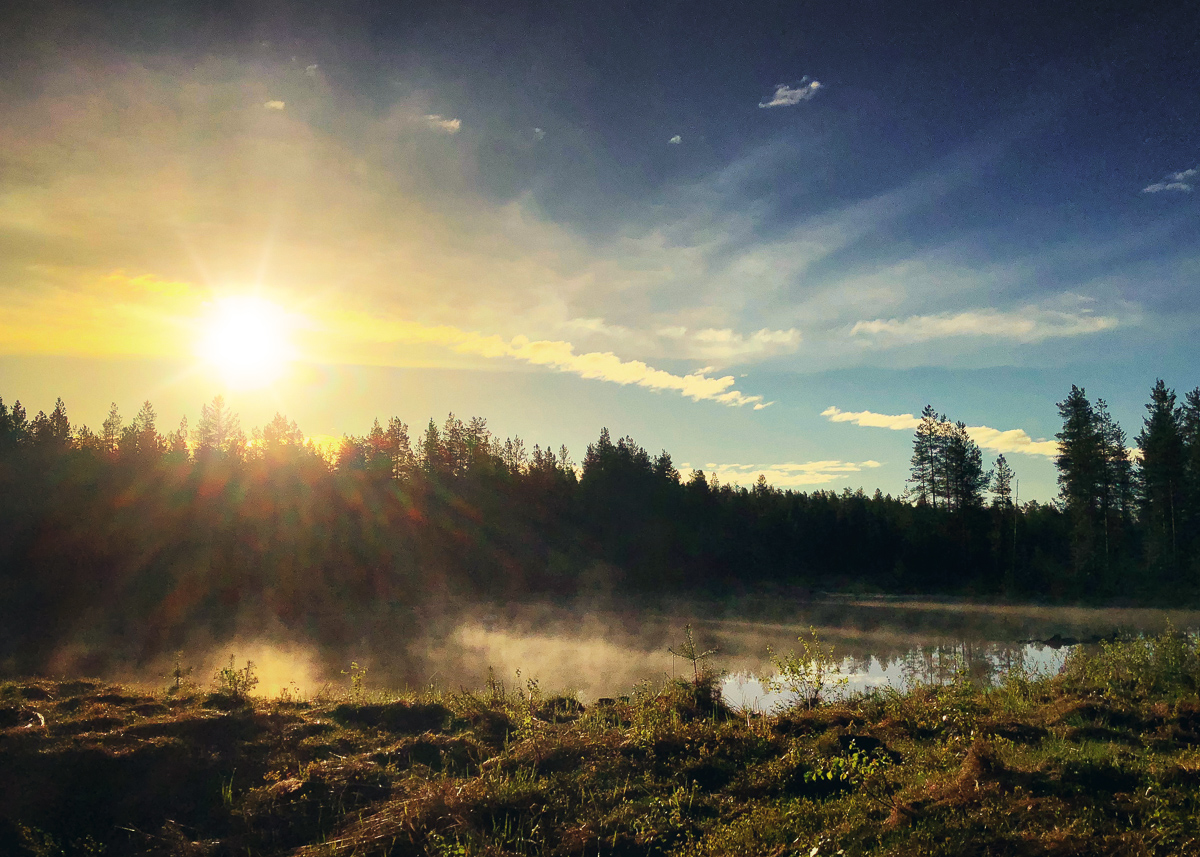
A few of us rose early the following morning for a misty walk around a lake where we spotted some Siberian Tits. After breakfast we all set out in search of Red-flanked Bluetail, following a trail up towards Iivaara mountain. A couple of us continued all the way to the summit, where the views across the surrounding landscape were well worth the climb.


Later that afternoon Tuomas received news of a Three-toed Woodpecker sighting nearby. We set off immediately in search of it, and once again his local knowledge paid off. Thanks to his sharp eyes we quickly tracked it down and enjoyed brilliant views to round off our time in the area.


Ivalo — Days 7–8
Our journey continued north to Ivalo, where we were based for the next two nights, birding along the route as we went. On the way, we crossed the Arctic Circle at Tankavaara and later stopped for a scenic walk up to a mountain plateau near Saariselkä.
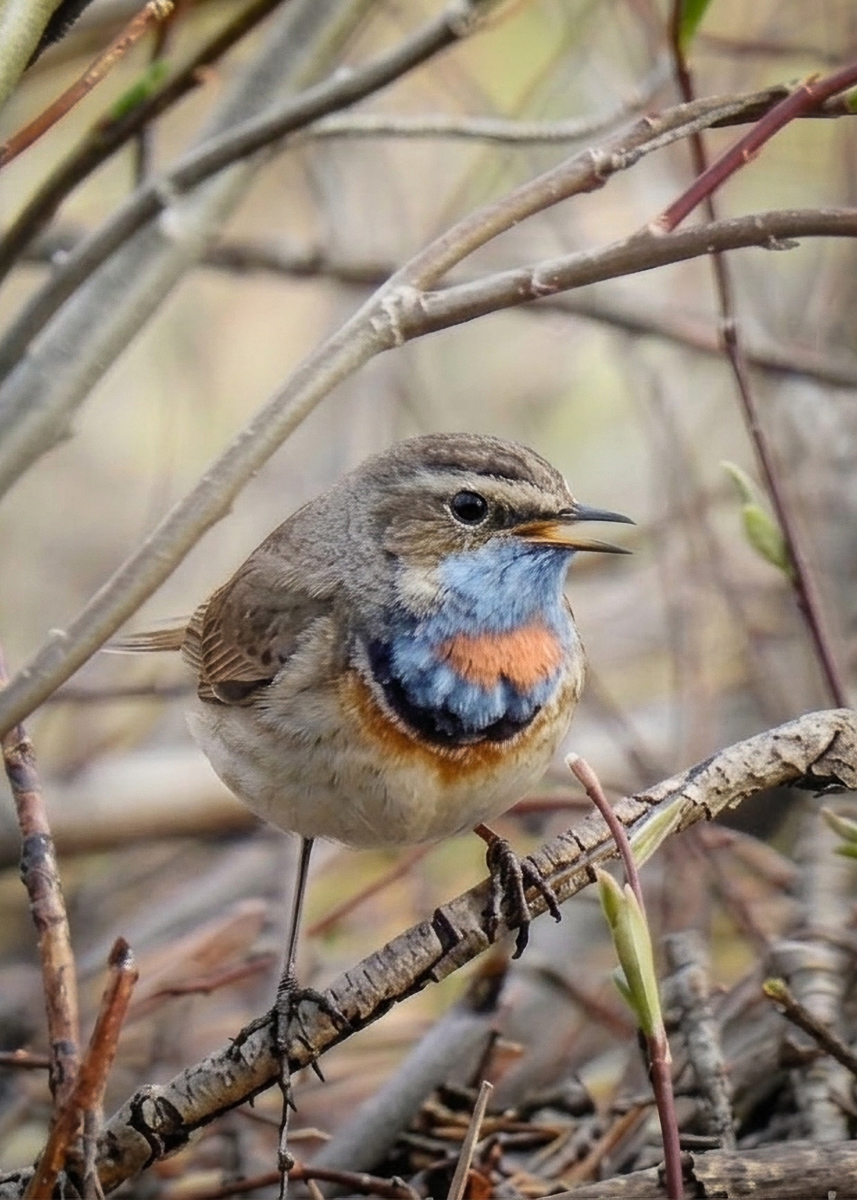

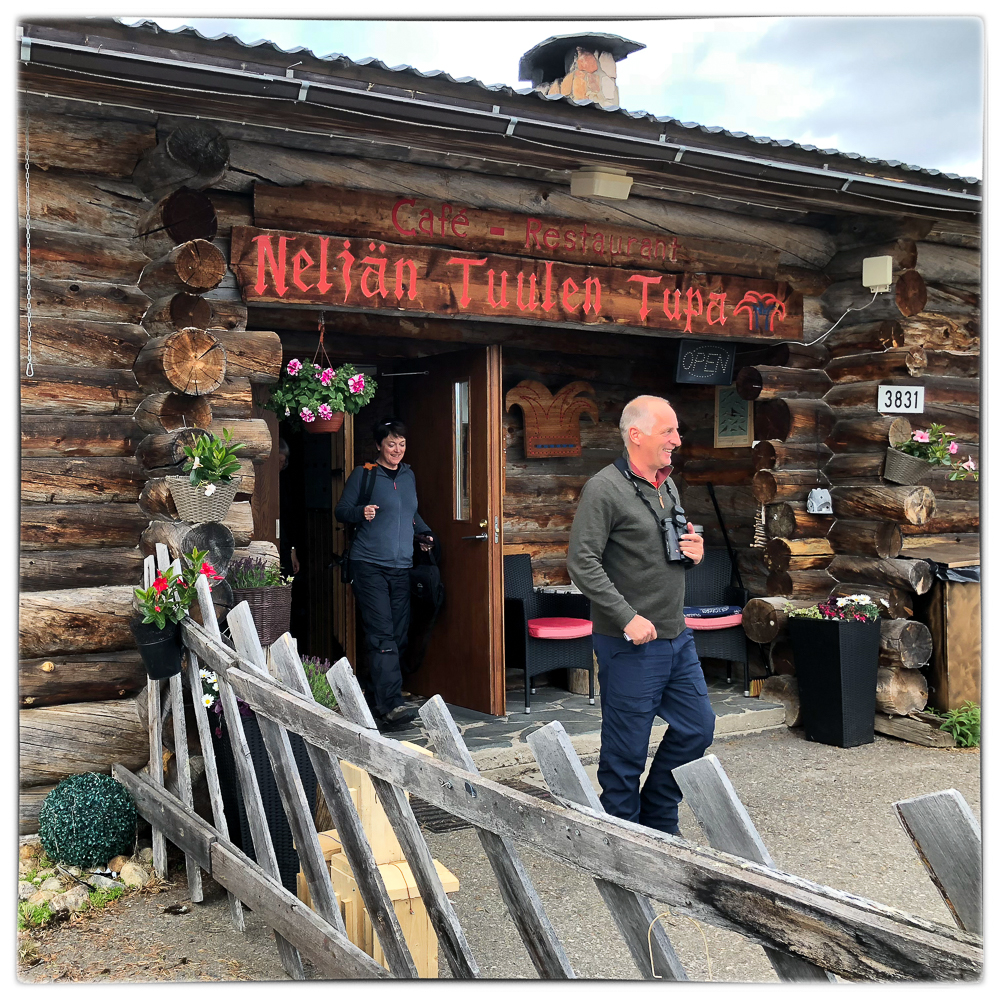
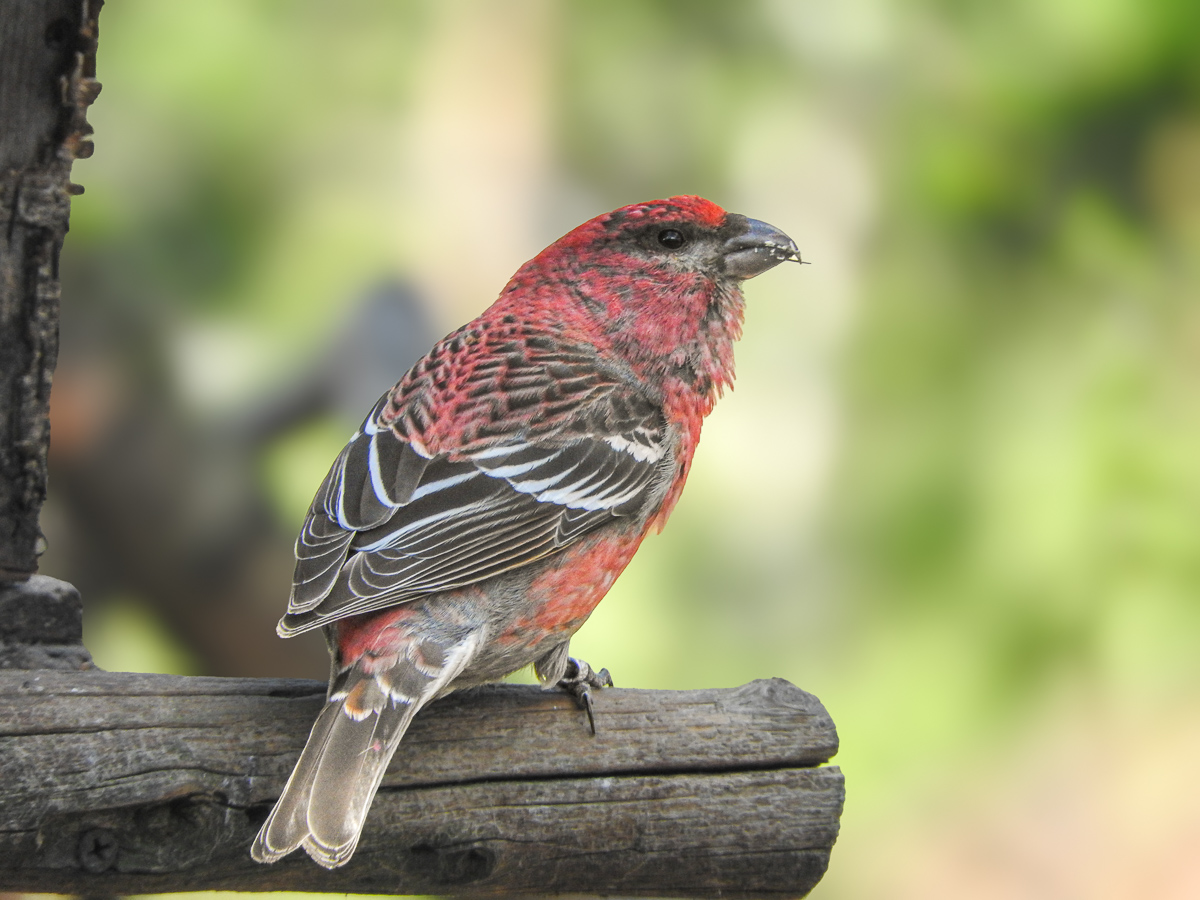
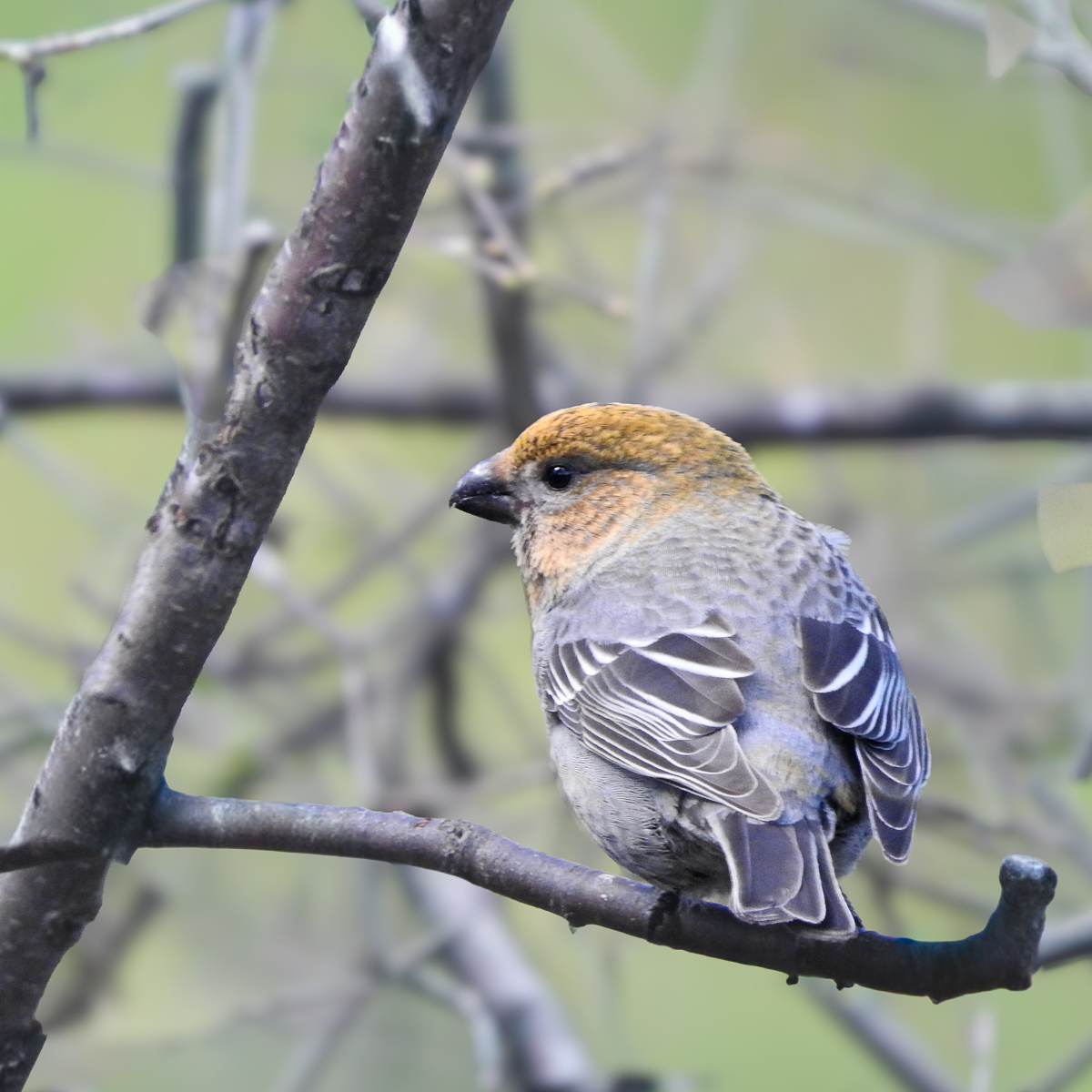
The following day was spent exploring the surrounding area. In the morning, we stopped off near some reindeer pens before driving further up into the hills. We stopped for lunch at a little place called Neljän Tuulen Tupa (The House of the Four Winds). This was soon nicknamed the “Grosbeak Café” due to the many bird feeders set up just outside the dining room windows, allowing us to watch Pine Grosbeaks up close while we ate.


In the evening, we headed out to a viewing tower near Veskoniemi to take in the vast Lapland views. It was a wonderful way to wrap up our time in Finland, as this was also our final day with Tuomas, who had been such a brilliant guide throughout the first leg of our trip.
Vadsø — Days 9–11
After one last stop at the Grosbeak Café on our way past, we set off towards Vadsø. Before crossing the border, we detoured up a mountain pass just past Utsjoki where we had heard Dotterel might be found; luck was on our side, and we spotted a small group of four. Further along, a supermarket lunch stop gave me the chance to try liquorice ice cream, which was surprisingly tasty!


Crossing the border into Norway felt like coming home. We stopped along the shores of Varangerfjorden near Nesseby for a walk before covering the final stretch to Vadsø. After an excellent dinner, we rounded off the evening with a walk around a tiny lake called Dammen on Store Vadsøya.

The next morning, after another walk around Dammen, we set off along the fjord towards Vardø, stopping at the Skallelva river to admire the unusual decorations on the local houses and boat sheds. After lunch in Vardø, we took the short ten-minute boat trip out to Hornøya Nature Reserve.


Hornøya — Norway’s easternmost island
This small island, covering only 0.4 square kilometres and surrounded by the vast expanse of the Barents Sea, is the easternmost point of Norway. Hammered by winter storms and then bathed under the summer’s midnight sun, Hornøya is one of the most extreme places in northern Norway and is home to one of the country’s largest seabird colonies. The cliffs are home to thousands of seabirds, including Razorbill, Atlantic Puffin, European Shag, Common Guillemot, Brünnich’s Guillemot, Black-legged Kittiwake, Great Black-backed Gull, and Herring Gull.

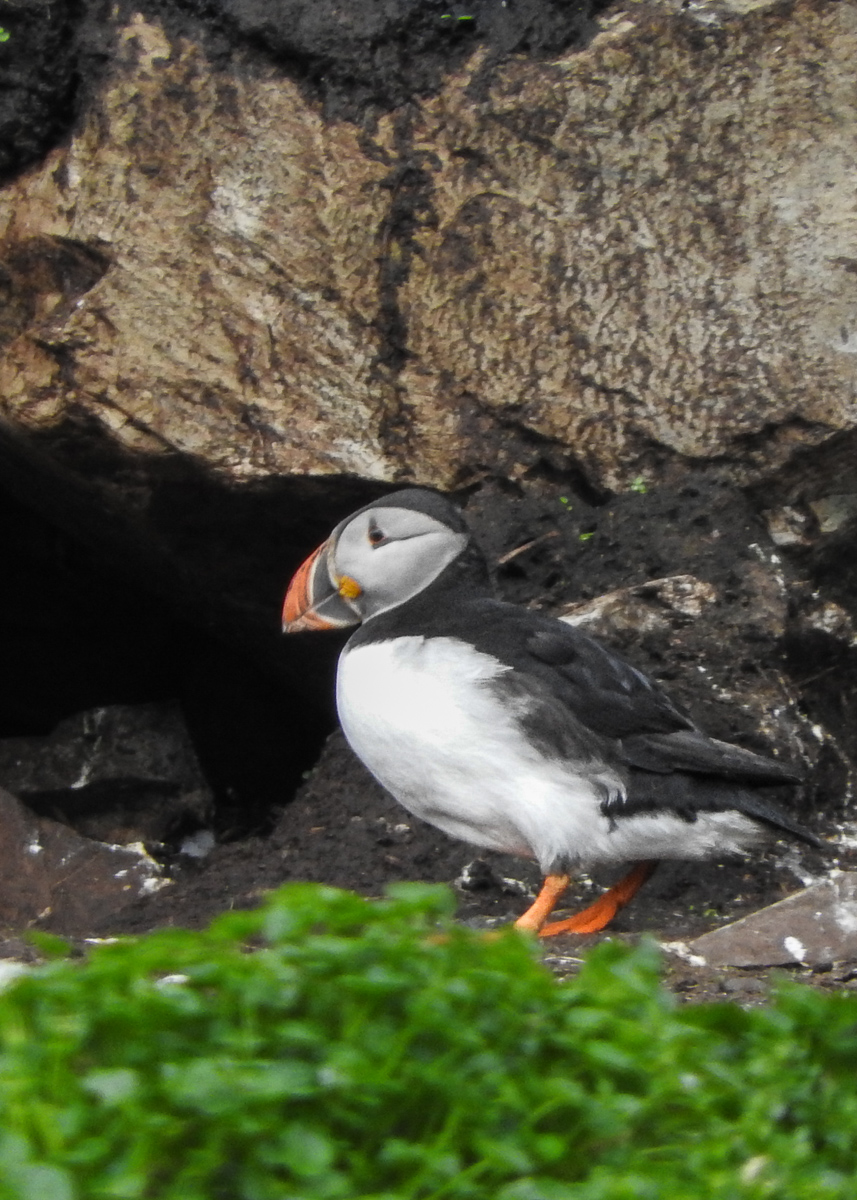
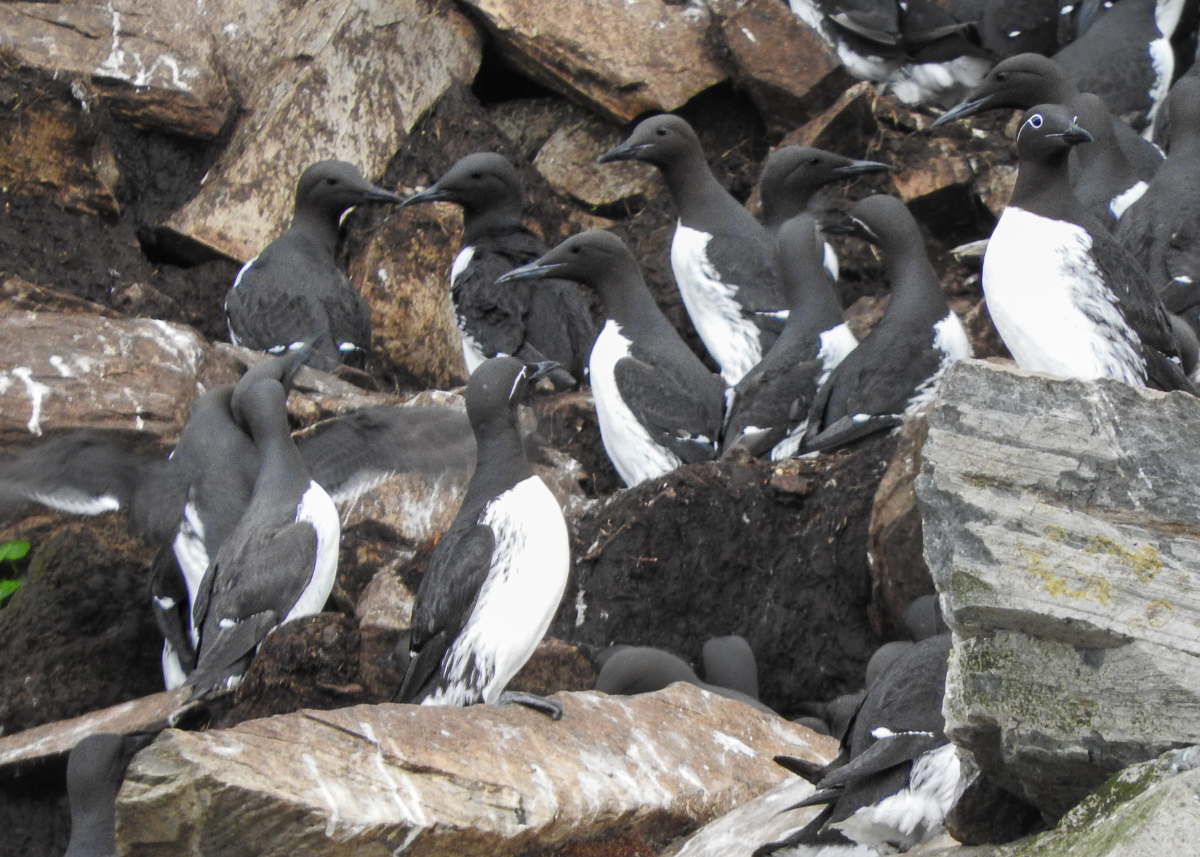

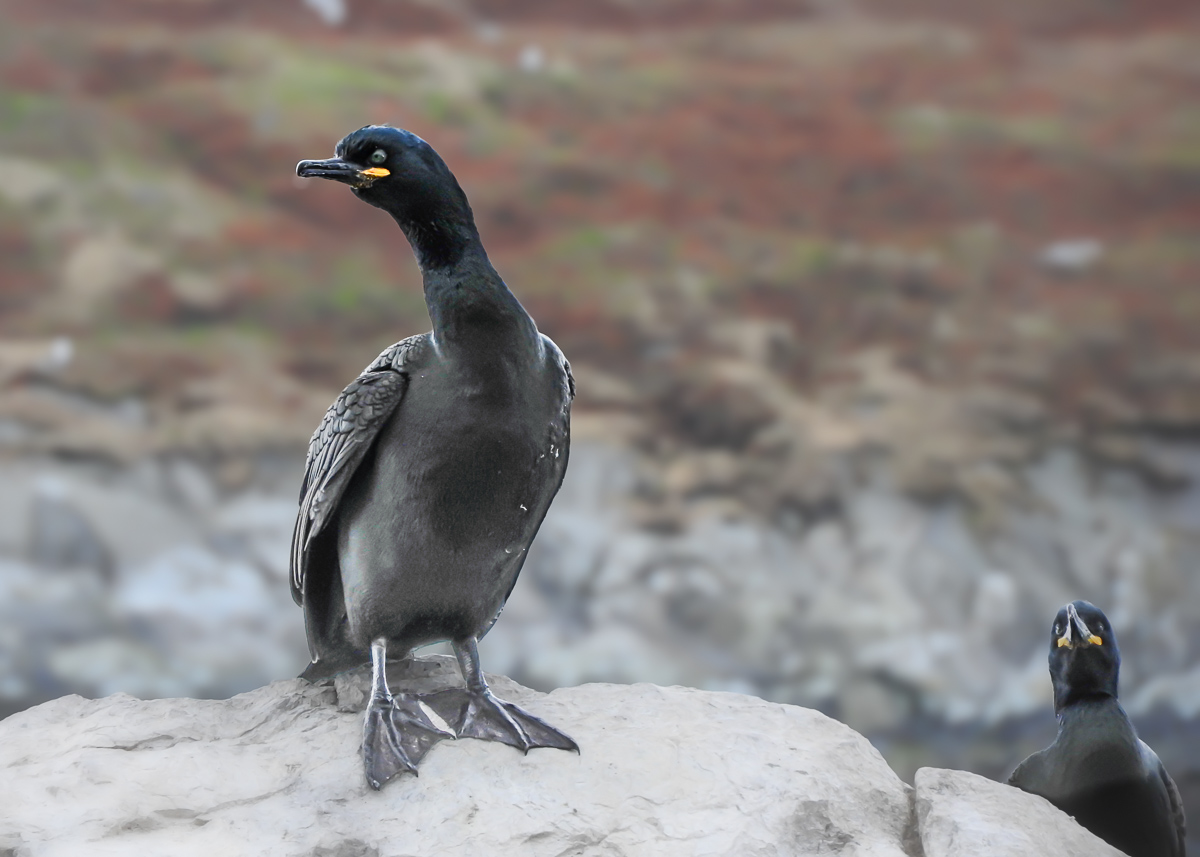
Although visitors are restricted to a relatively small area near the landing point, the experience is extraordinary. There were birds all around us and you could almost touch them. The noise was deafening and the smell was appalling. Then, to make it even more atmospheric, it looked like a storm was coming in and the sky darkened.


Returning to Vardø, we explored Vardøhus Fortress, the world’s northernmost fortification, before heading back.


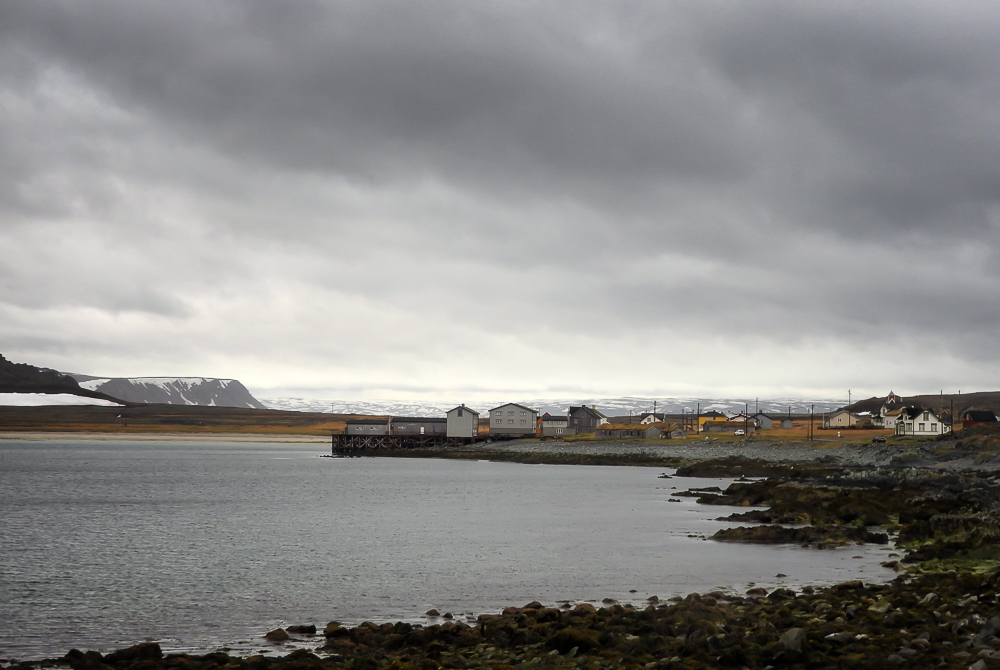
The following day was spent continuing to explore along the Varangerfjord. We drove from Vardø towards Båtsfjord, stopping regularly to search for birds and to photograph the spectacular scenery.

Båtsfjord — Days 12–13
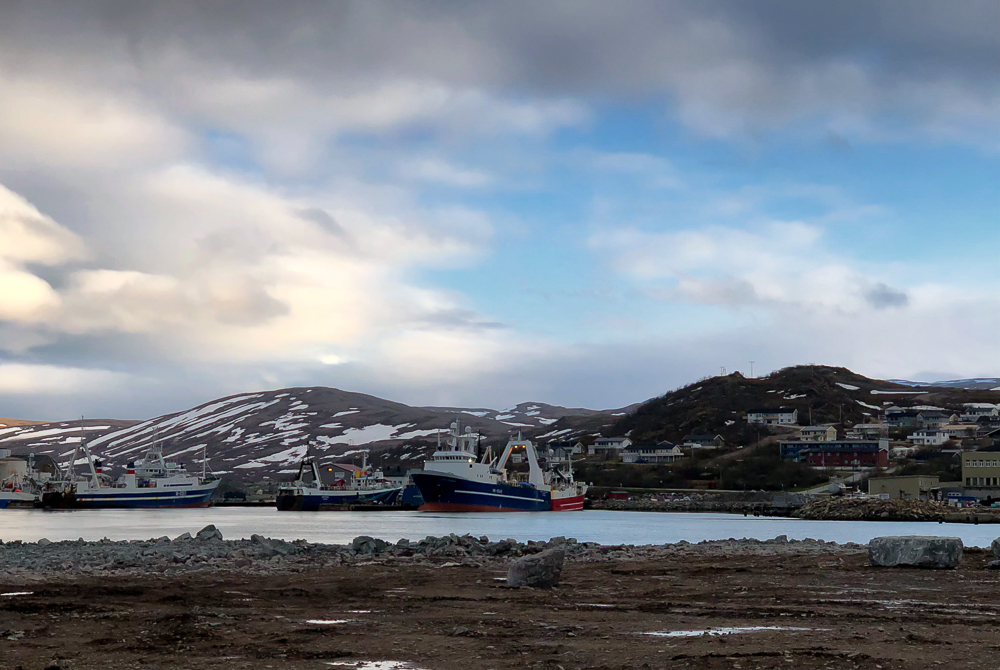
Leaving Vadsø behind, we continued along the Varanger Peninsula towards Båtsfjord, following the Tana River and stopping at Tanamunningen along the way. The route took us through increasingly dramatic Arctic landscapes as we crossed the mountains towards the coast.
Just before beginning the descent into Båtsfjord, Ruth spotted a magnificent Snowy Owl. This was a first for her as well as for most of the group, and although it was only a brief sighting, it was one of the most memorable highlights of the journey.


The following day, we headed back over the mountains hoping for another glimpse of the owl. Luck was on our side and we eventually managed to relocate it, although this time it was a long way off.
We continued down into Kongsfjord and travelled on towards Berlevåg where we had lunch, stopping to take in the scenery and search for birds along the way.


Return to Ivalo — Days 14–15
Our time on the Varanger Peninsula had come to an end, and we began the journey back to Finland. Leaving Norway behind, we crossed the mountains once more, enjoying the views of the snow-covered landscape before following the Tana River back towards the border.


Once back in Finland, we of course had to make the obligatory stop at the ‘Grosbeak Café’ before continuing to Ivalo.


After dinner, we took a quiet evening walk to the local viewing platform, where we were treated to a view of two moose in the distance.


On our final morning, I squeezed in a short walk around the area before it was time to head to the airport for our flights back to Helsinki and then home.
It was a great experience, with good company and brilliant birding. As well as finding many new species, one of the highlights was seeing familiar birds transformed by their breeding plumage. The long daylight hours of late spring, combined with the abundance of northern habitats, made this a memorable journey through some of Europe’s finest birding country. It is a trip I would highly recommend.
Additional photos